Introduction
Bai Dinh Pagoda Ninh Binh is the largest Buddhist complex in Vietnam and one of the most significant spiritual landmarks in Southeast Asia. Located in the heart of Ninh Binh Province, this vast temple complex blends ancient religious heritage with monumental modern architecture, set against a dramatic backdrop of limestone mountains and river valleys.
More than just a place of worship, Bai Dinh Pagoda represents the spiritual soul of Ninh Binh — a destination where Buddhism, history, architecture, and landscape come together in remarkable harmony.
This guide explains what Bai Dinh Pagoda is, why it is important, what to see, how to plan your visit, and how it fits into a complete Ninh Binh itinerary.
 For a broader regional overview, see our complete Things to Do in Ninh Binh guide.
What Is Bai Dinh Pagoda?
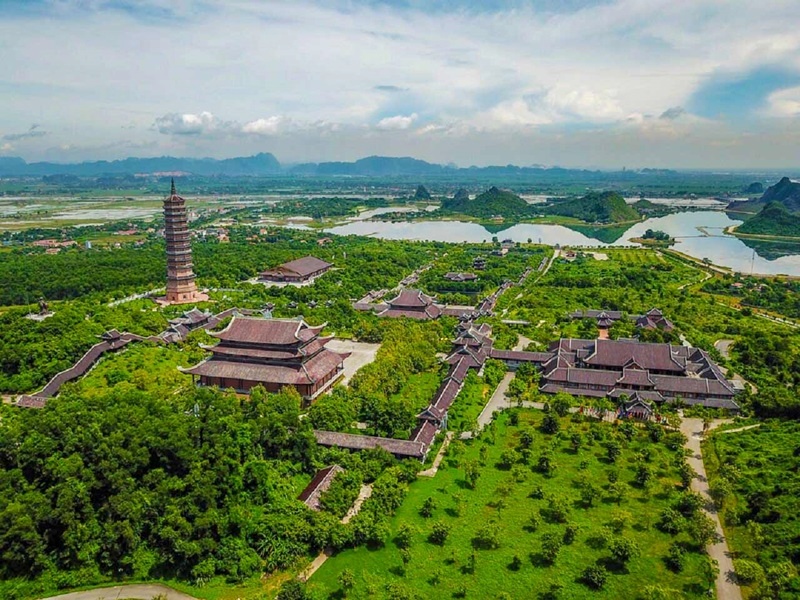
Bai Dinh Pagoda is a vast Buddhist complex covering nearly 700 hectares, divided into two main areas:
- Ancient Bai Dinh Pagoda – dating back over 1,000 years
- New Bai Dinh Pagoda Complex – constructed from 2003 to 2010
The site is officially recognized as:
- The largest Buddhist complex in Vietnam
- Home to multiple national and Asian records, including:
- The largest bronze Buddha statue in Vietnam
- The longest corridor of Arhat statues in Asia
- One of the tallest stupas in Southeast Asia
Bai Dinh is located approximately 95 km south of Hanoi, within easy reach of other major Ninh Binh attractions such as Trang An, Hoa Lu, and Tam Coc.
History & Spiritual Significance of Bai Dinh Pagoda
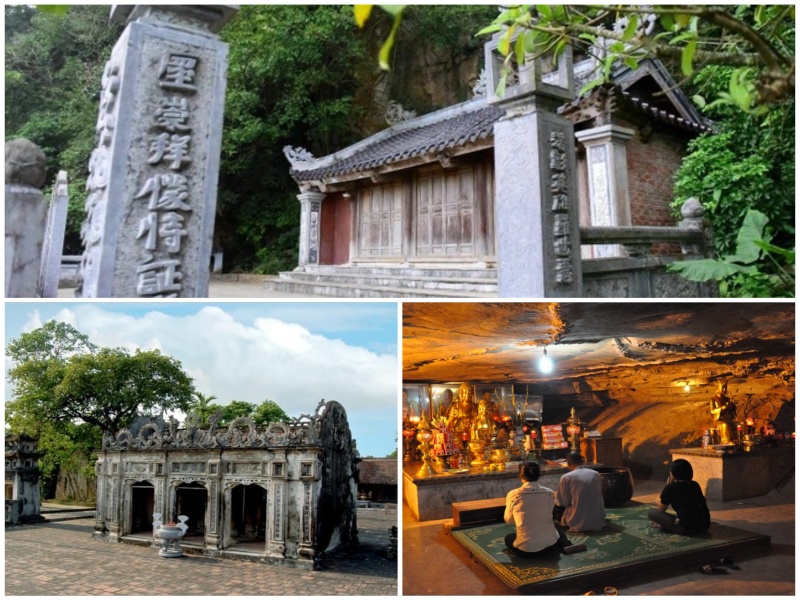
Ancient Bai Dinh Pagoda
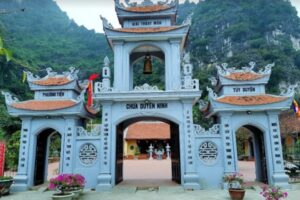
The ancient pagoda was founded in 1121 during the Ly Dynasty by the famous Zen master Nguyen Minh Khong. It was originally a sacred site dedicated to Buddha, mountain deities, and national guardian spirits.
Hidden among limestone caves and forested hillsides, the ancient pagoda served as a quiet spiritual retreat for monks and pilgrims for centuries.
New Bai Dinh Pagoda Complex
In 2003, construction began on the new Bai Dinh complex with the vision of creating a major Buddhist center that preserves traditional Vietnamese architecture while showcasing monumental scale.
Today, the complex plays an important role in:
- Buddhist pilgrimages
- National festivals
- Cultural and spiritual education
- International religious events
Despite its size, Bai Dinh remains an active place of worship, not merely a tourist attraction.

Architecture & Layout of Bai Dinh Pagoda
Bai Dinh Pagoda Ninh Binh is designed in traditional Vietnamese Buddhist architectural style, using stone, wood, and bronze as primary materials.
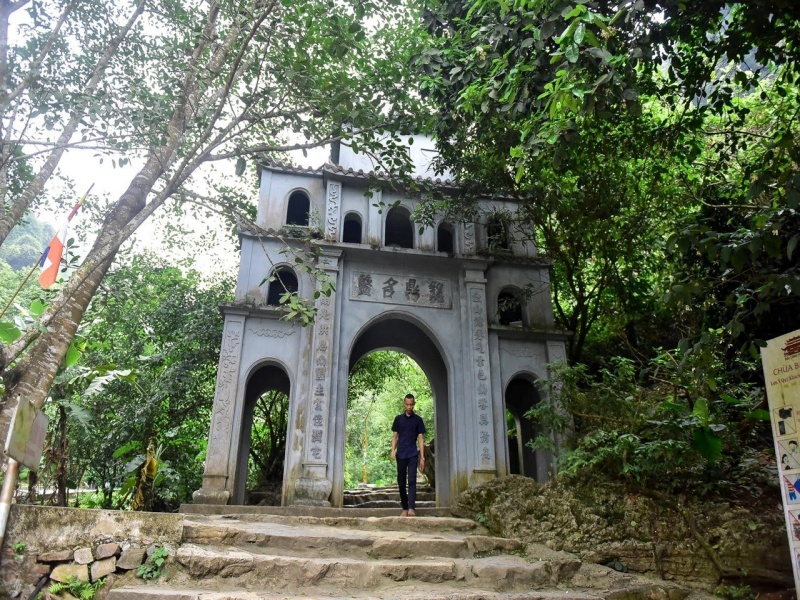
Ancient Bai Dinh Pagoda
The ancient pagoda is located about 800 meters uphill from the main complex.
Key features include:
- Stone stairways leading through forested hills
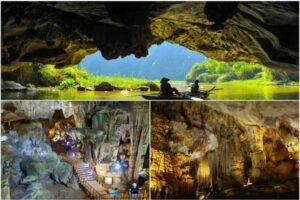
- Cave temples built into limestone cliffs
- A quiet, contemplative atmosphere far removed from crowds
This area offers a more intimate and spiritual experience compared to the monumental new complex.
New Bai Dinh Pagoda Complex
The new complex spreads across 80 hectares and includes multiple grand structures connected by long stone corridors and landscaped courtyards.
Walking distances inside the complex are long, so visitors should plan accordingly.

Must-See Highlights at Bai Dinh Pagoda
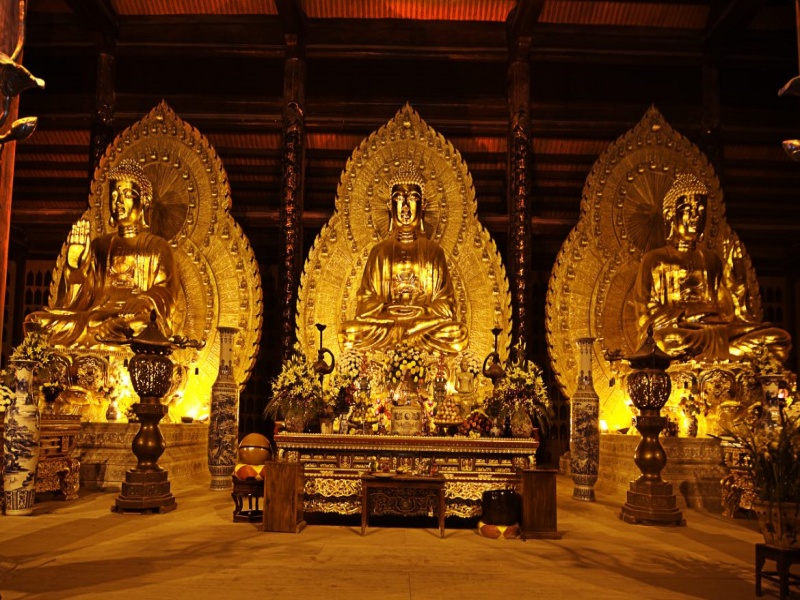
The Great Buddha Hall (Dien Tam The)
This is the spiritual heart of Bai Dinh Pagoda.
Inside the vast hall stands a 100-ton bronze statue of Buddha Shakyamuni, one of the largest of its kind in Vietnam. The hall is supported by massive wooden pillars and decorated with intricate carvings, creating a solemn and awe-inspiring atmosphere.
Arhat Corridor (Hanh Lang La Han)
Stretching nearly 3 kilometers, the Arhat Corridor features over 500 life-sized stone statues, each representing a disciple of Buddha with unique facial expressions and postures.
Walking this corridor is one of the most memorable experiences at Bai Dinh temples and symbolizes the Buddhist path toward enlightenment.

Bell Tower
The Bell Tower houses a 36-ton bronze bell, one of the largest in Vietnam. The deep resonance of the bell is believed to carry prayers and blessings across the surrounding mountains.
Visitors may ring the bell gently, following temple etiquette.
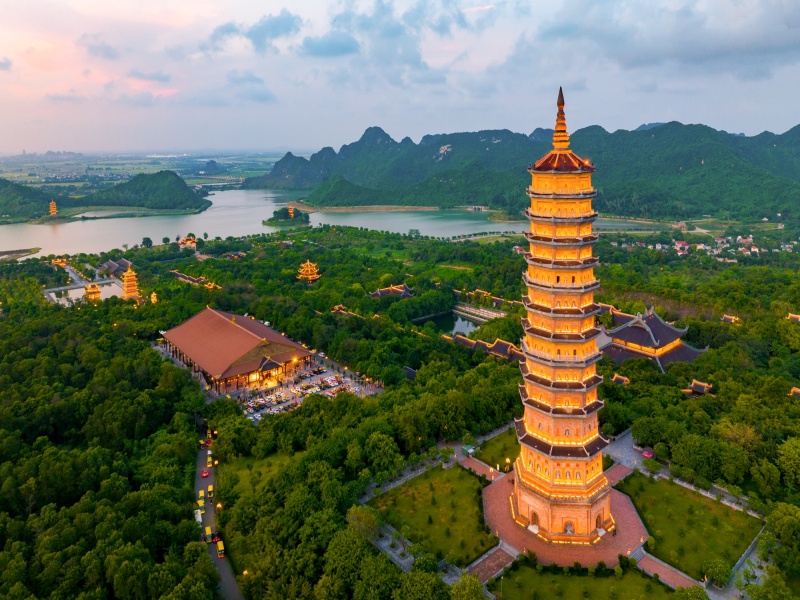
Bao Thap (Stupa Tower)
The Bao Thap is a 13-story stone stupa offering panoramic views over the entire Bai Dinh complex and the surrounding karst landscape.
An elevator is available for those who prefer not to climb the stairs. Sunset views from the top are especially beautiful.

Gieng Ngoc (Pearl Well)
The Pearl Well is an ancient moon-shaped well believed to have been used by monks for ritual purification. It remains an important spiritual site and a place for quiet reflection.

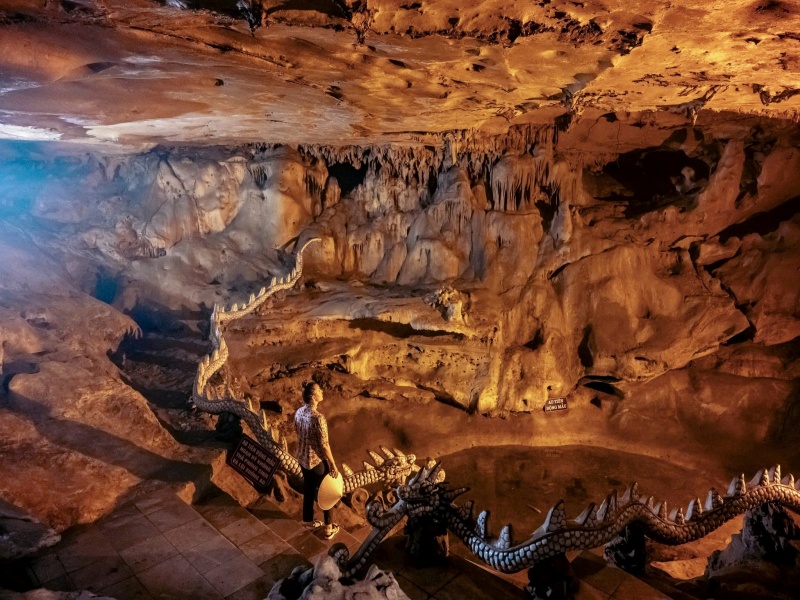
Bright Cave & Dark Cave
These two natural caves were historically used for meditation:
- Bright Cave symbolizes enlightenment and clarity
- Dark Cave represents introspection and the inner spiritual journey
Together, they reflect core Buddhist philosophies of balance and self-awareness.
Entrance Fees & Opening Hours
- Entrance ticket: Free
- Electric car service (inside complex): 100,000 VND/person/round trip
- Elevator to Stupa Tower: 50,000 VND/person
- Opening hours: 6:00 AM – 6:00 PM daily
Best Time to Visit Bai Dinh Pagoda
Bai Dinh Pagoda in Ninh Binh is open year-round, but timing affects the experience:
- February – April: Festival season, especially during Bai Dinh Festival (crowded but culturally vibrant)
- September – October: Pleasant weather, fewer visitors
- Early morning or late afternoon: Cooler temperatures and better atmosphere
For seasonal planning across the region, see Best time to visit Ninh Binh.

How to Get to Bai Dinh Pagoda?
From Hanoi
- Limousine bus or private car: ~2–2.5 hours
- Train to Ninh Binh city, then taxi (~20 minutes)
From Ninh Binh City
- Taxi or motorbike: ~20 minutes
See full transport details in How to get from Hanoi to Ninh Binh.
How Bai Dinh Pagoda Fits into a Ninh Binh Itinerary?
Bai Dinh Pagoda is often combined with nearby attractions due to its central location:
- Trang An Landscape Complex – UNESCO cave & river heritage
- Hoa Lu Ancient Capital – Vietnam’s first capital
- Mua Cave Viewpoint – panoramic views over Tam Coc
- Tam Coc Vietnam – countryside river landscapes
A common approach:
- Morning: Bai Dinh Pagoda
- Afternoon: Trang An or Hoa Lu
- Sunset: Mua Cave viewpoint
See suggested routes in Ninh Binh 1-Day Itinerary and Ninh Binh 2-Day Itinerary.

Travel Tips for Visiting Bai Dinh Pagoda
- Wear modest clothing (covered shoulders and knees)
- Expect long walking distances — comfortable shoes are essential
- Bring cash for electric cars and small services
- Visit early to avoid heat and crowds
- Respect temple rules and maintain a quiet atmosphere
FAQs – Bai Dinh Pagoda Ninh Binh
Is Bai Dinh Pagoda worth visiting?
- Yes. It is the most important Buddhist site in Ninh Binh and a unique combination of spirituality, architecture, and landscape.
How much time should I spend at Bai Dinh Pagoda?
- Plan at least 3–4 hours to explore both the main complex and key highlights comfortably.
Can Bai Dinh be visited in one day from Hanoi?
- Yes. It is commonly included in full-day Ninh Binh itineraries.
Is Bai Dinh Pagoda suitable for families?
- Yes, though elderly visitors may prefer using electric car services due to walking distances.
Conclusion – Why Bai Dinh Pagoda Matters
Bai Dinh Pagoda Ninh Binh is more than the largest Buddhist complex in Vietnam — it is a living spiritual landscape where history, faith, and nature coexist on an extraordinary scale.
Whether you come for pilgrimage, architecture, or cultural exploration, Bai Dinh offers a profound experience that complements Ninh Binh’s natural wonders and historical sites.
Understanding Bai Dinh Pagoda as part of the wider Ninh Binh cultural landscape will make your journey deeper, calmer, and far more meaningful.