Introduction
There’s something quietly magical about Ninh Binh’s landscapes — limestone mountains rising through morning mist, rivers reflecting the sky, and rice fields changing color with the seasons.
But behind that beauty, the weather plays a much bigger role than many travelers expect.
Understanding Ninh Binh weather helps you choose not just when to visit, but how to experience the region at its best — whether you’re chasing golden rice fields, clear skies, or peaceful countryside moments.
In this guide, I’ll walk you through the climate, seasonal changes, and what each time of year really feels like — based on both local experience and real travel patterns.

Quick Answer: What is Ninh Binh weather like?
Ninh Binh has a humid subtropical climate with four distinct seasons.
- Best overall conditions: March – April, September – October
- Hottest period: June – August
- Coolest period: December – January
- Rainy season: May – September
In general, the weather is travel-friendly year-round — but each season offers a very different atmosphere.

Overview of Ninh Binh Climate
Ninh Binh sits in Northern Vietnam’s Red River Delta, which means the climate is shaped by both tropical humidity and seasonal monsoon patterns.
Key characteristics:
- Average temperature: ~23°C
- High humidity most of the year
- Clear distinction between wet and dry seasons
- Seasonal shifts affect scenery significantly
Unlike some destinations with stable weather, Ninh Binh changes noticeably throughout the year — and that’s exactly what makes it interesting.
 For a deeper breakdown, see: Temperature in Ninh Binh
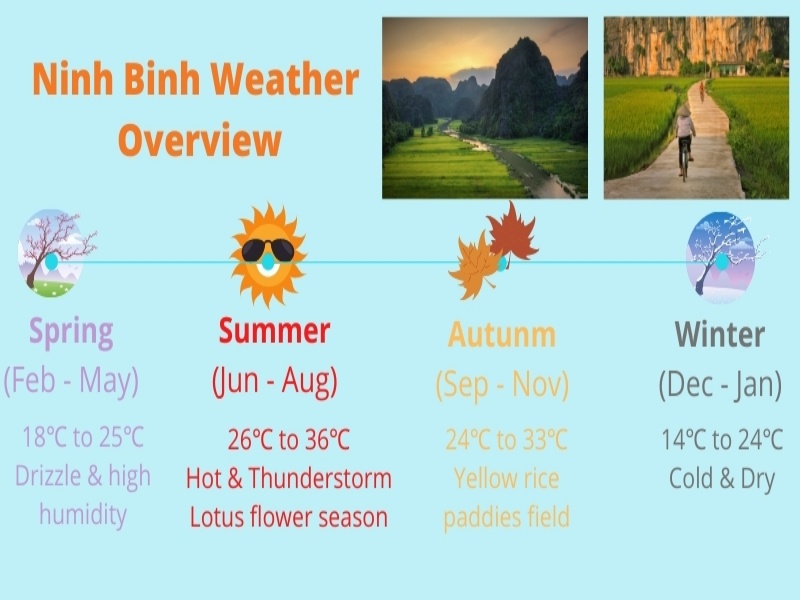
Ninh Binh Weather by Season
Spring (March – April)
Spring feels like a fresh start in Ninh Binh.
The air becomes lighter, temperatures are comfortable, and the countryside turns vibrant green as rice fields begin growing again.
- Temperature: 20–26°C
- Rainfall: Low to moderate
- Atmosphere: Fresh, lively, balanced
This is often one of the most enjoyable times to explore the region slowly.
You can get a deeper look at seasonal conditions in our guide to Ninh Binh in March.

Early Summer (May – June)
Early summer brings warmth — but also some of the most iconic landscapes.
The countryside transitions from green to golden as rice fields reach harvest season.
- Temperature: 28–34°C
- Humidity: High
- Rain: Occasional short showers
The heat is noticeable, but mornings and late afternoons remain very pleasant.
If you’re curious about seasonal scenery, explore our guide to Ninh Binh rice fields and Ninh Binh in May.

Autumn (September – October)
Autumn is often considered the most balanced season.
After the summer rains, the air becomes clearer, and temperatures drop slightly.
- Temperature: 24–30°C
- Rainfall: Decreasing
- Atmosphere: Calm, comfortable
This period combines good weather with beautiful scenery — making it a favorite for many travelers.
Explore our guide to Ninh Binh in October.

Winter (November – February)
Winter brings a completely different mood.
The air is cooler, sometimes misty, and the overall atmosphere becomes quieter.
- Temperature: 15–22°C
- Rainfall: Low
- Atmosphere: Peaceful, slightly moody
It’s not cold in a harsh way — but the damp air can make mornings feel cooler than expected.
For more details, see our guide on Ninh Binh in December and Ninh Binh in January.

Ninh Binh Weather by Month (Quick Guide)
If you’re planning specific travel dates, here’s a simple breakdown:
| Month | Weather | Travel Feel |
|
|
|
|
|
|
|
|
|
|
|
|
|
|
|
|
|
|
|
|
|
|
|
|
|
|
|
|
|
|
|
|
|
|
|
|
For full planning, you can explore Ninh Binh itinerary to match your travel dates.
How weather affects your travel experience?
Weather in Ninh Binh doesn’t just affect temperature — it changes how the entire landscape feels.
- Clear days → better visibility for scenery
- Humid days → slower travel pace
- Rainy periods → greener landscapes
- Cool seasons → more comfortable exploration
This is why choosing the right timing depends on your personal travel style, not just weather data.

Best time to visit Ninh Binh based on weather
From a purely weather perspective:
- Best months: March, April, September, October
- Good alternatives: May, November
- More challenging: July, August
However, “best” depends on what you want:
- Clear skies → autumn
- Fresh greenery → spring
- Dramatic landscapes → early summer
For a complete decision guide, see best time to visit Ninh Binh.

Weather Tips for Travelers
From local experience, here are a few simple but important tips:
- Start outdoor activities early in the morning
- Avoid midday heat during summer months
- Always check short-term forecasts in rainy season
- Pack light layers — even in warmer months
- Expect humidity to affect how temperatures feel
These small adjustments can make a big difference in comfort.
Planning Your Trip Around Weather
Once you understand the weather, planning becomes much easier.
You can:
- Choose the right season for your travel style
- Adjust your daily schedule
- Pack appropriately
Combine weather with your itinerary
To organize everything smoothly, check:

FAQ: Ninh Binh Weather
Is Ninh Binh weather good year-round?
Yes. While some months are more comfortable, the region is accessible throughout the year.
When is the hottest time in Ninh Binh?
June to August, especially during midday.
When is the coolest period?
December and January, particularly in the early morning.
Does it rain a lot in Ninh Binh?
Rain is most common between May and September, usually in short bursts.
Conclusion
Ninh Binh weather is not just about temperature — it shapes the entire travel experience.
From fresh spring landscapes to misty winter mornings, each season offers a different perspective of this unique region.
By understanding how the climate changes throughout the year, you can choose the right time to visit and enjoy Ninh Binh in a way that truly matches your travel style.