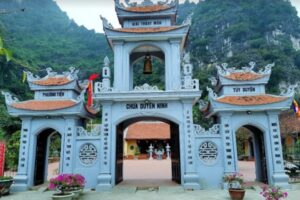
Mua Cave (Hang Mua) in Ninh Binh is worth the climb for its viewpoint, not for the cave. 486 stone steps lead up Ngoa Long Mountain to a ridge where the Ngo Dong River, rice fields and limestone peaks of Tam Coc spread out below. Most visitors reach the top in 20 to 30 minutes and spend 1.5 to 2 hours in total.
There is a small cave at the base, and Hang Mua means “Dancing Cave” in Vietnamese, but the reason people come here is the view. This guide covers the climb, the viewpoints, the ticket price, the best time to go and how to get here from Hanoi, Tam Coc and Ninh Binh city.
Mua Cave at a Glance
- Location: Near Tam Coc, Ninh Binh, northern Vietnam
- Known for: Panoramic viewpoints, limestone scenery and the dragon-shaped ridge
- Climb: Commonly described as approximately 500 stone steps
- Suggested visit duration: Around 1.5–2 hours for the viewpoint and lower grounds, depending on your pace
- Difficulty: Moderate for many visitors, with steep and exposed sections
- Best for: Landscape photography, scenic viewpoints and travelers who enjoy light hiking
- Entrance fee: Check the latest price before visiting
- Getting there: Bicycle, motorbike, taxi or private transfer from nearby accommodation
Visitor information can change. Confirm current entrance fees, opening hours, parking charges and access conditions before your trip.
Is Mua Cave Worth Visiting?
Mua Cave is worth considering if you enjoy panoramic scenery, photography, and a physical activity that can be completed within a relatively short visit.
It is particularly appealing to travelers who want to see the Tam Coc landscape from above rather than only from a boat.
Mua Cave may be a good choice if you:
- Enjoy mountain viewpoints and landscape photography.
- Are comfortable climbing steep stone steps.
- Want to combine a viewpoint with a Tam Coc boat trip.
- Have enough time to explore more than one attraction in Ninh Binh.
- Prefer outdoor activities over spending the entire day at museums or indoor attractions.
However, the climb may not suit everyone. The steps can be tiring, especially during hot weather, and wet stone can become slippery.
If you have limited mobility, balance difficulties, or concerns about climbing, assess the route carefully before deciding to visit.

What Is Mua Cave Famous For?
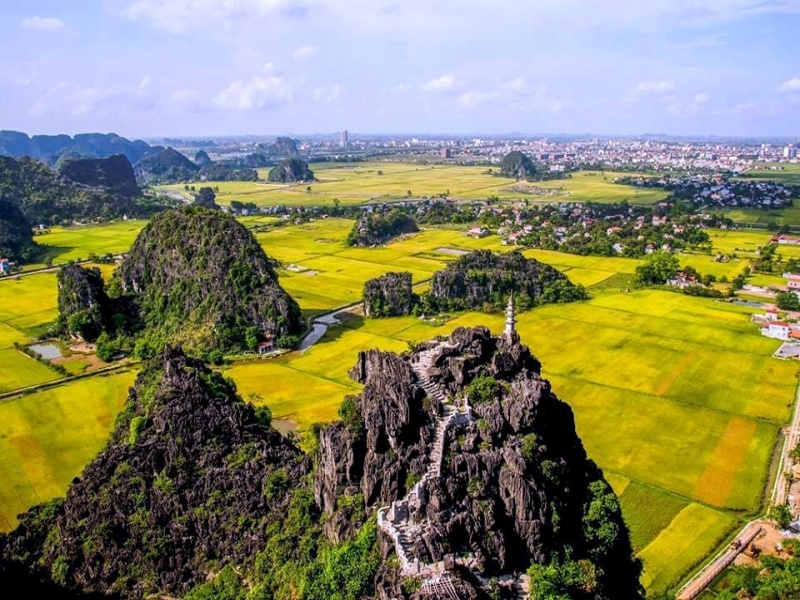
Mua Cave is best known for its elevated views of the Tam Coc landscape. From the mountain, visitors can look across limestone karsts, green or golden rice fields, and the winding Ngo Dong River.
The attraction combines a short but demanding climb with opportunities for photography, sightseeing, and exploring the surrounding countryside.
The Panoramic View of Tam Coc
The main reason to visit Mua Cave is the view from above.
The Ngo Dong River winds through a valley surrounded by limestone formations and agricultural land. From the higher viewpoints, the landscape appears more expansive than it does from the road or river below.
The scenery changes throughout the year. Rice fields may appear bright green during periods of active growth and turn golden around harvest time. The exact appearance depends on the local agricultural calendar and weather.
For photographers, the elevated perspective offers a different way to appreciate Ninh Binh’s landscape.
Ngoa Long Mountain and the Stone Dragon
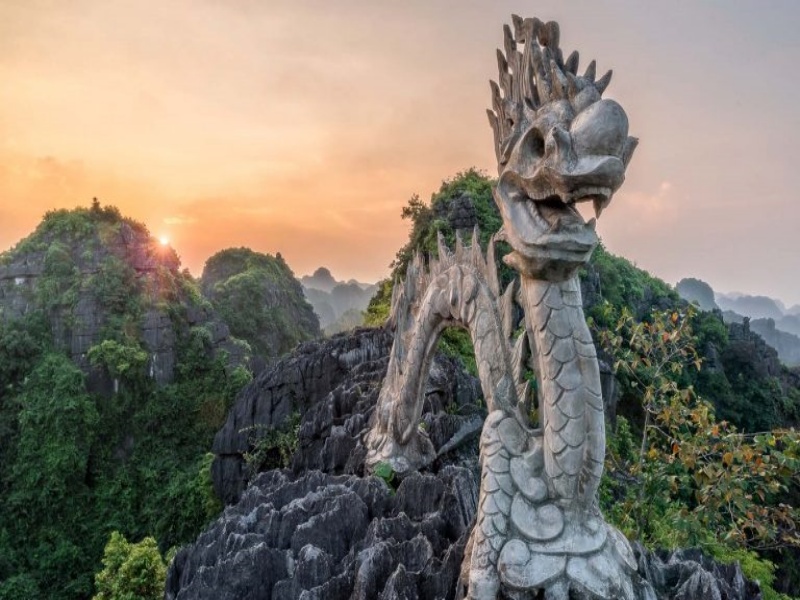
One of the best-known features of Mua Cave is the stone dragon sculpture along the mountain ridge.
Visitors climb a series of stone steps to reach the upper viewpoints, where the dragon and surrounding limestone scenery create a distinctive silhouette.
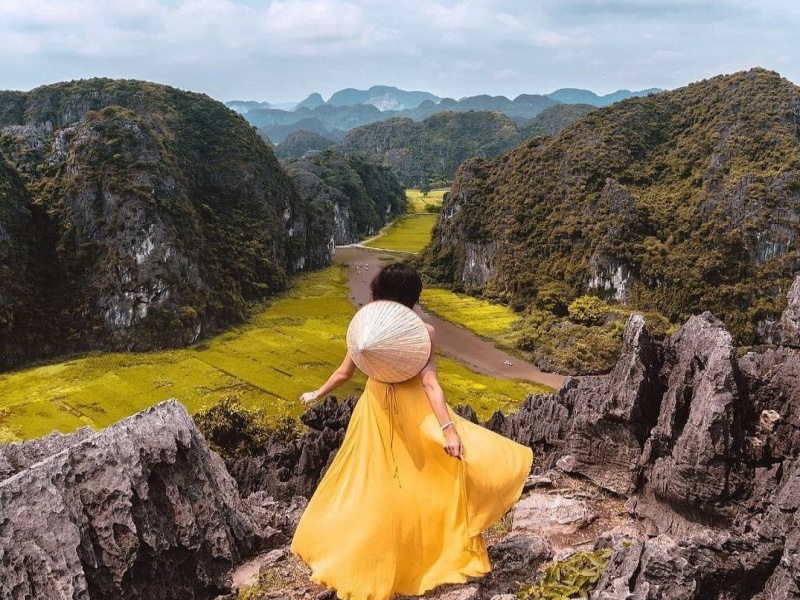
The ridge can be narrow and exposed in places. Take your time, keep a safe distance from steep edges, and avoid moving into unsafe positions simply to take a photograph.

A Different Perspective on Ninh Binh
Many visitors explore Ninh Binh by boat, passing between limestone mountains along rivers and through caves.
Mua Cave provides a contrasting experience: instead of viewing the scenery from the water, you climb above the valley to see how its rivers, fields, and karst formations fit together.
If you are planning a wider trip, read our Ninh Binh travel guide for an overview of the region’s main attractions and experiences.
The Lotus Lake, Gardens and Base Area
The grounds at the foot of the mountain offer a different experience from the summit. Here, you can explore landscaped areas, walk around the lotus pond when accessible, and enjoy views of the mountain without undertaking the full climb.
Lotus flowers are a seasonal highlight, often associated with the warmer months. Blooming conditions vary, so the pond may look different depending on the time of year and the current growing season.
This lower area is a useful option for families, visitors with limited time and anyone who prefers a more relaxed visit. Allow some time to explore rather than assuming the summit is the only worthwhile part of Mua Cave.

Visit Tiger Cave and the Garden Area
Near the entrance, visitors can explore Tiger Cave and landscaped gardens without climbing the mountain. This area is suitable for families or travelers who prefer light walking instead of the full hike.

Entrance Fee and Opening Hours
It is important to verify ticket prices and opening hours before visiting Mua Cave (Hang Mua). Older online guides may display different prices or schedules—this can happen when an attraction updates its policies or when websites fail to reflect the most current information. An entrance ticket is required to visit Mua Cave. Below are the latest ticket prices, effective from April 1, 2026.
Entrance ticket:
- Adult: 150,000 VND per person
- Children under 1 m: Free
- Parking: Motorbike 10,000–15,000 VND | Car ~30,000 VND
Opening hours: 6:00 AM – 5:00 PM daily
The ticket includes access to the viewpoint, lotus lake, gardens, and surrounding grounds. While slightly higher than some nearby attractions, the experience here is distinct enough that most visitors find it worthwhile.
When is the best time to visit Mua Cave?
Mua Cave can be visited throughout the year, but weather, seasonal scenery and visitor numbers can significantly affect the experience.
Best Season for Rice Fields and Lotus Flowers
The landscape around Tam Coc changes with the agricultural calendar. During greener periods, rice fields create a lush backdrop beneath the limestone mountains. Near the harvest period, parts of the valley may turn golden.
Late May and early June are often associated with the golden rice scenery around Tam Coc, but the exact timing varies from year to year. Field conditions depend on local planting and harvesting schedules, so there is no guarantee that the entire valley will be golden on a particular date.
The lotus pond at Mua Cave can also be a seasonal attraction, with flowering conditions varying according to the weather and growing season.
If scenery is your main priority, check recent photographs or local updates close to your travel dates rather than relying on a fixed calendar alone.
 Rice and lotus timing varies from year to year. For month-by-month planning see our Best time to visit Ninh Binh guide.

Sunrise, Morning or Late Afternoon?
Early morning is often a good choice if you want cooler temperatures and a more comfortable climb. Arriving early can also help you avoid some of the midday heat, although visitor numbers depend on the season and day.
Late afternoon can offer softer light across the valley, which is attractive for landscape photography. However, the viewpoint may be busy, especially around popular photography times.
Always check the current opening arrangements and leave enough time to descend safely. Do not plan your visit around sunset without confirming that access and return timing are suitable.
Weather, Heat, Rain and Visitor Levels
Heat and humidity can make the staircase more tiring, particularly during the warmer months. Bring drinking water, wear breathable clothing and avoid rushing the climb.
Rain creates another consideration: wet stone steps and exposed paths can become slippery. If heavy rain or thunderstorms are forecast, reconsider climbing and follow any local access restrictions.
The busiest periods vary with holidays, group arrivals and the time of day. Early morning may provide a more comfortable experience, but it cannot guarantee an empty summit.
For broader seasonal advice, see our Ninh Binh weather by season guide.

How to Get to Mua Cave Ninh Binh?
Mua Cave is located near Tam Coc and is commonly included in a visit to the main attractions around Ninh Binh. Your best transport option depends on where you are staying, how comfortable you are riding independently and whether you plan to visit several places in one day.
From Hanoi
Most travelers reach Ninh Binh from Hanoi by limousine van, train or private car. The journey commonly takes around 2–2.5 hours by road in favorable conditions, although traffic, pickup arrangements and the exact destination can affect the total travel time.
Once you arrive in the Ninh Binh area, you will need additional transport to reach Mua Cave.
If you are making a day trip from Hanoi, account for both the journey to Ninh Binh and travel between attractions. Starting early can leave more time for sightseeing, but the actual schedule should reflect your transport arrangements and preferred pace.
For route options and transport planning, read our Hanoi to Ninh Binh Guide.
From Tam Coc and Ninh Binh City
Mua Cave is a short journey from the Tam Coc area and is also accessible from Ninh Binh City. The exact distance and travel time depend on your accommodation and the route taken.
Common transport options include:
- Bicycle: A flexible option for travelers staying nearby who are comfortable cycling in local conditions.
- Motorbike: Offers independence for experienced riders who are legally permitted and confident riding in Vietnam.
- Taxi or car: Convenient if you prefer not to cycle or ride a motorbike.
- Private transfer: Useful when combining Mua Cave with several attractions or when traveling with family or luggage.
Check the route from your actual accommodation before setting off. If cycling or riding a motorbike, take account of traffic, weather and road conditions.
How Long Do You Need at Mua Cave?
For many visitors, around 1.5–2 hours is a reasonable planning estimate for climbing the mountain, spending time at the viewpoints and exploring some of the lower grounds. Your visit may take longer if you walk slowly, take frequent breaks, wait for photographs or explore additional areas.
A shorter visit focused on the summit may require less time, while photography enthusiasts may prefer to stay longer.
The climb itself is often estimated at around 20–30 minutes for the ascent, but this is not a guarantee. Fitness, heat, crowding and the number of stops can all affect the time required. Allow additional time for the descent.
If you are combining Mua Cave with other attractions, avoid planning every stop too tightly. Transport between sites, ticket queues, meals and changes in weather can affect the schedule.
What to Visit Near Mua Cave?
Mua Cave can be combined with several other attractions in Ninh Binh. The best combination depends on how much time you have and which experiences interest you most.
- Tam Coc is known for its boat journey along the Ngo Dong River, where limestone cliffs rise above waterways and rice fields. It offers a different perspective from Mua Cave: rather than looking across the valley from a summit, you travel through the landscape at water level.
- Trang An offers boat journeys through a landscape of limestone mountains, waterways, caves, and cultural sites. It is part of the Trang An Landscape Complex, recognized by UNESCO as a mixed cultural and natural World Heritage property.
- Bich Dong Pagoda and Other Nearby Attractions: Depending on your schedule, you may also consider Bich Dong Pagoda, Hoa Lu Ancient Capital, Bai Dinh Pagoda or Thung Nham Bird Park.
For a broader overview of the region, explore our Best Things to Do in Ninh Binh Guide.

FAQs About Mua Cave Ninh Binh
- How many steps are there at Mua Cave? 486 stone steps lead to the top.
- How long does it take to climb Mua Cave? Most people take 20 to 30 minutes at a steady pace, longer with photo stops.
- Is Mua Cave difficult to climb? Moderately. The steps are steep in places and exposed to sun, but most reasonably fit people manage them with breaks.
- How much is the Mua Cave entrance fee? It is 150.000VND/Pax
- What are the Mua Cave opening hours? It is from 06:00am – 17:00pm
- Is there a real cave at Mua Cave? Yes, but it is small. A small cave called Tiger Cave sits near the entrance, with stalactites and stalagmites inside. Around it are landscaped gardens and a lotus lake with wooden walkways, which bloom from May to June.
- Is Mua Cave suitable for children? Older children who can handle stairs usually manage it. Very young children and strollers are not practical on the steps. The base area is easier.
- Can I visit Mua Cave in the rain? You can, but wet steps are slippery and views are poorer. If it is raining heavily, consider another day or stay at the base.
- Can I visit Mua Cave without a tour? Yes. Take a bicycle, motorbike or taxi from Tam Coc or Ninh Binh city and buy your ticket at the entrance.
- Can I visit Mua Cave and Tam Coc in one day? Yes. They are close, and many travellers combine them.
Practical Tips Before Visiting
A little preparation can make the climb more comfortable and help you avoid common problems.
- Check the Weather Before Climbing: Heat, rain, and poor visibility can significantly affect the experience. If the steps are wet or thunderstorms are expected, consider changing your schedule.
- Bring Enough Water: The climb can feel more demanding in hot and humid conditions. Carry drinking water and take breaks whenever necessary.
- Wear Shoes with Good Grip: Uneven stone steps can be challenging, especially when wet. Suitable footwear helps you maintain a more secure footing.
- Take Care at the Summit: The upper viewpoints may include narrow or exposed sections. Follow marked paths, avoid leaning over edges, and do not climb onto unsafe rocks for photographs.
- Protect Your Belongings: Keep your phone, camera, and other valuables secure while climbing. Avoid looking at your screen while moving on steep or crowded steps.
- Respect the Landscape and Other Visitors: Do not leave rubbish behind, damage plants, or obstruct other visitors for extended periods while taking pictures. Responsible behavior helps preserve the attraction for future travelers.
- Verify Prices and Transport Before Leaving: Confirm the entrance fee, opening hours, parking arrangements, and transport costs using current information. Older travel articles may contain outdated figures. A quick check can help prevent unexpected expenses or schedule problems.
Mua Cave offers a memorable way to experience Ninh Binh from above. The climb can be demanding, but visitors who are comfortable with steep steps are rewarded with views of limestone mountains, the Tam Coc valley, and the surrounding countryside.
The best visit is not necessarily the one with the most activities. It is the one that fits your interests, physical comfort, available time, and the conditions on the day.