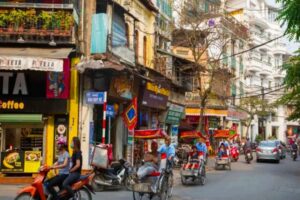
Hanoi’s food scene is not limited to restaurants or famous dishes. Some of its most interesting eating experiences can be found along busy Old Quarter streets, in small neighborhood food areas, and inside traditional markets.
Each area has its own character. You can find casual street food and late-night dining in the Old Quarter, specialty dishes on streets outside the city center, or everyday local snacks at neighborhood markets.
This guide introduces 16 food streets and local food areas in Hanoi, with a focus on what makes each place worth exploring.
Beyond food, Hanoi has plenty of cultural attractions, historic landmarks and local experiences to discover. Explore our guide to the best things to do in Hanoi if you want to plan more activities during your stay.
Visiting a local food street in Hanoi is an unmissable experience in the capital city.

Food Streets in Hanoi Old Quarter
Hanoi Old Quarter is one of the easiest places to explore local food on foot. Its narrow streets are lined with small restaurants, pavement eateries, cafés, and casual food stalls.
Not every street specializes in one particular dish. Some are known for their lively nightlife, while others are popular for a particular local specialty.
Hang Buom Street – A Lively Food and Nightlife Area
Hang Buom Street is one of the familiar streets to explore when walking around Hanoi Old Quarter. The area has a mix of Vietnamese eateries, international restaurants, casual dining spots, and places to enjoy a drink.
Traditional Vietnamese food remains part of the local dining scene, while the variety of restaurants makes the street accessible to visitors looking for different food options.
Hang Buom is also close to other busy streets in the Old Quarter, making it easy to include in an evening walk around the neighborhood.

Ta Hien Street – Hanoi’s Famous Beer Street
Ta Hien is one of the liveliest streets in Hanoi Old Quarter, especially in the evening. It is widely known for its small beer bars, pavement seating, and casual atmosphere.
Plastic stools spill onto the pavement as visitors and locals gather for drinks and simple dishes. Common options include fried spring rolls, chicken feet, grilled snacks, and other small plates that go well with beer.
Ta Hien is more about the social atmosphere than fine dining. It is a good place to experience Hanoi’s busy nightlife and enjoy an informal evening with friends.

Ho Hoan Kiem Street – A Short Street Famous for Nom Bo Kho
Ho Hoan Kiem Street is a very short street, approximately 52 meters long, connecting Dinh Tien Hoang Street with Cau Go Street beside Hoan Kiem Lake.
Despite its small size, it is known for a familiar Hanoi sidewalk dish: nom bo kho, or green papaya salad with dried beef.
Two eateries associated with this street are Nom Bo Kho Long Vi Dung and Nom Bo Kho Thanh Hai, both located at No. 23 Ho Hoan Kiem Street. They offer a casual way to try this popular local salad, with other snacks also available.
Its central location makes the street easy to visit while exploring Hoan Kiem Lake and the surrounding Old Quarter.

Gam Cau Street – Hotpot and BBQ Beneath the Railway
Gam Cau Street is known for its hotpot and grilled-food restaurants. Around five to six eateries remain along this short street, which is just over 200 meters long.
Most restaurants are concentrated near the beginning and middle of the street. Tables are set out along the roadside beneath the elevated railway, creating a distinctive dining atmosphere.
The railway runs above the dining area, separate from the restaurant seating. In the evening, the street becomes a casual place to enjoy hotpot or grilled dishes with friends and family.

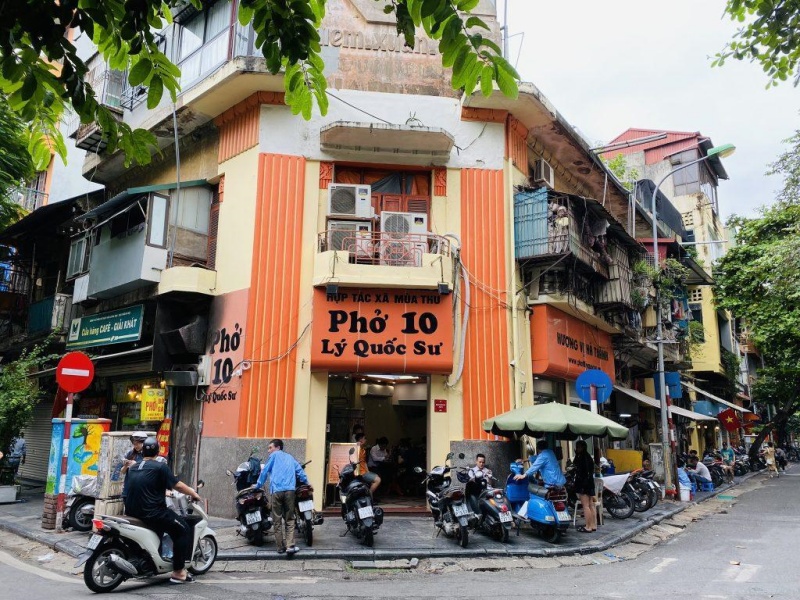
Ly Quoc Su Street – A Familiar Area for Hanoi Pho
Ly Quoc Su Street is closely associated with pho, one of Hanoi’s best-known traditional dishes. The street and its surrounding area have several places where visitors can enjoy a bowl of Vietnamese noodle soup.
Hanoi pho is usually served with soft rice noodles, sliced beef or chicken, and a clear, aromatic broth. Some diners also enjoy it with quay, a crispy fried dough stick.
If you want to explore Hanoi’s food culture, Ly Quoc Su is a convenient area to try this familiar local dish while walking around the central Old Quarter.
Tong Duy Tan Street – A Long-Established Dining Street
Tong Duy Tan is a well-known dining street in Hanoi, particularly for people looking for food in the evening.
The street has a range of casual eateries serving Vietnamese dishes, grilled food, hotpot, and other everyday meals. It is a practical option when you want to sit down for a meal rather than simply grab a quick street snack.
Nearby Cam Chi Lane adds to the area’s dining options, with cafés and restaurants that attract both local customers and visitors.
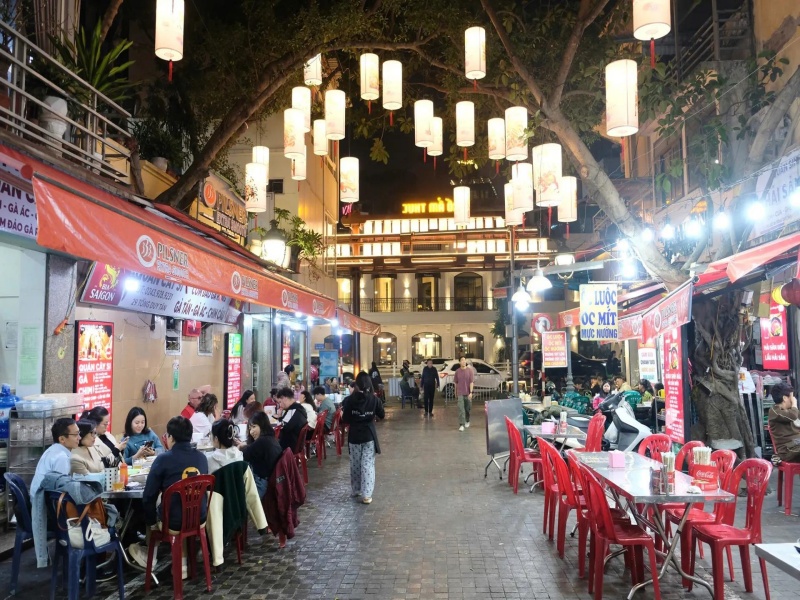
Tong Duy Tan Street is the gathering place of dozens of delicious dishes from main meals like “Bún dọc mùng” – rice noodles-taro soup, Hanoi “Bún chả” – rice vermicelli with barbecued pork, “bánh cuốn” – steamed rice rolls to Western snacks and drinks. This street is also famous for having many cafes open 24/7, located close to each other right in the middle of the intersection of Cam Chi Lane and Tong Duy Tan, for example Puku and Xofa cafes.
Dong Xuan Market Alley – Traditional Street Food in the Old Quarter
Located near Dong Xuan Market, this small food alley is a popular stop for people exploring the Old Quarter’s traditional food scene.
The alley is known for its compact eateries and a variety of familiar Vietnamese dishes. Depending on the stalls operating when you visit, you may find noodle soups, snail dishes, fried snacks, rice cakes, and sweet desserts.
Rather than expecting a polished restaurant setting, come for the informal atmosphere and the chance to see how everyday food is served in a busy local neighborhood.

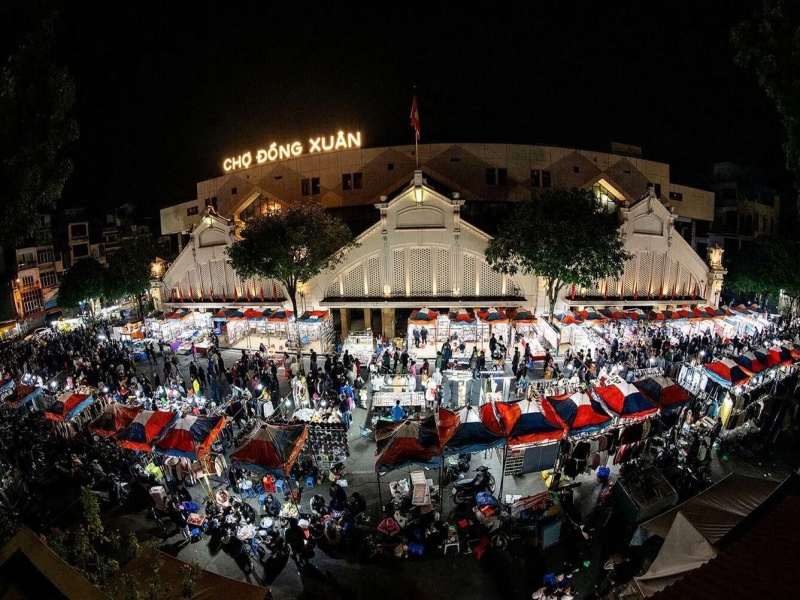
Dong Xuan Night Market – A Weekend Evening Food Stop
Dong Xuan Night Market is part of the weekend walking and shopping scene in Hanoi Old Quarter. Alongside clothing, souvenirs, and other goods, visitors can find street-food stalls selling casual snacks and refreshments.
Food options may include grilled skewers, fried snacks, shrimp cakes, spring rolls, and Vietnamese sweet soups. The selection can vary between vendors and market days.
The night market is a convenient stop if you are already exploring the Old Quarter in the evening. It is best enjoyed as part of a wider walk rather than as a destination for one specific dish.
Famous Food Streets and Areas Beyond the Old Quarter
Beyond the central Old Quarter, several streets and neighborhood areas have their own food identity. Some are associated with a particular Hanoi specialty, while others are places where residents gather for affordable everyday meals and snacks.
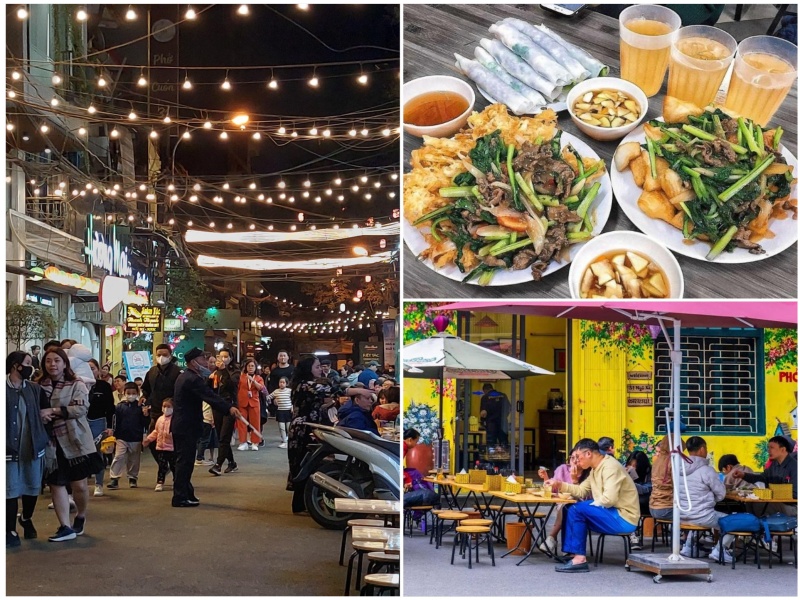
Ngu Xa Street – Known for Pho Cuon and Pho Chien Phong
Ngu Xa Street, in the Truc Bach area of Ba Dinh, is well known for two dishes made with pho rice noodles: pho cuon and pho chien phong.
Pho cuon consists of fresh rice noodle sheets rolled around beef and herbs, usually served with a light dipping sauce. Pho chien phong is made from fried pieces of rice noodle that puff up and are served with beef and vegetables in a savory sauce.
The street is a good place to try these two variations of pho beyond the more familiar bowl of noodle soup.
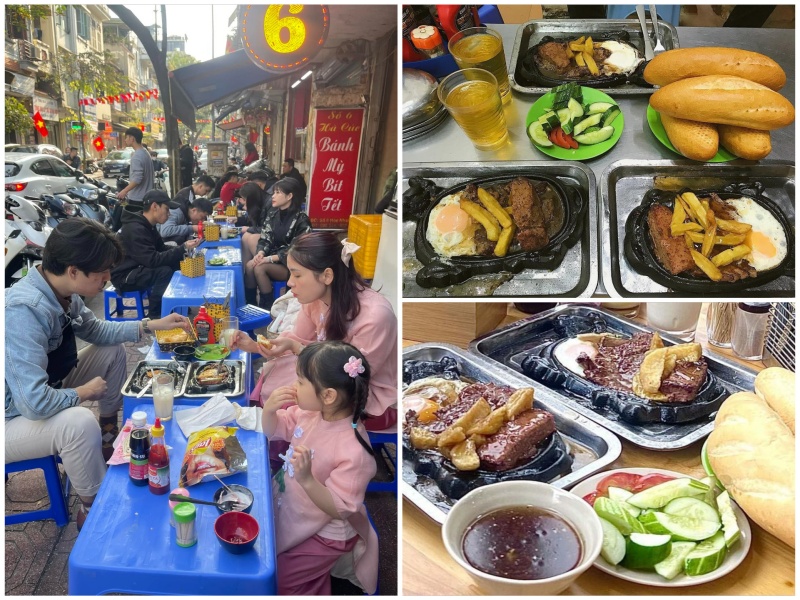
Hoe Nhai Street – Hanoi’s Vietnamese-Style Steak Area
Hoe Nhai Street is known for its Vietnamese-style steak restaurants, often serving beef with eggs, bread, pâté, and simple accompaniments.
Unlike Western-style steak restaurants, these casual meals are often served in a straightforward local style. Diners can choose different combinations depending on the restaurant.
The street is worth considering if you want to try a familiar Vietnamese breakfast or casual meal in a neighborhood setting.
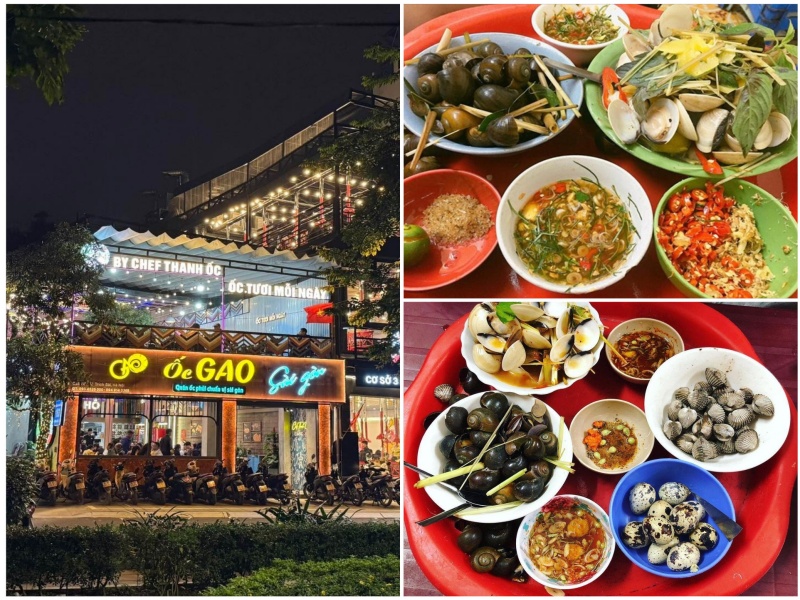
West Lake Area – Local Snail Restaurants by the Lake
The West Lake area has several clusters of restaurants specializing in Vietnamese snail dishes. Rather than being concentrated on one single street, these eateries are found along roads around the lake, including Trich Sai, Yen Phu, Thuy Khue, and To Ngoc Van.
Many restaurants open from the afternoon into the evening or late at night. Some have open-air seating and views towards the lake, making the area a pleasant place for a relaxed meal.
Popular preparations include boiled snails with lemongrass, snails stir-fried with tamarind, and grilled snails with spring onions. Menus and dining settings vary from one restaurant to another.
To Hieu Street – A Local Neighborhood Food Area
To Hieu Street in Cau Giay is a neighborhood dining area with restaurants, cafés, milk tea shops, and casual snack places.
Its food scene is influenced by the surrounding residential and student communities. You can find everyday Vietnamese meals as well as quick snacks and drinks.
To Hieu is not necessarily a major sightseeing destination, but it offers a look at the kind of casual food options that serve Hanoi residents in their daily lives.
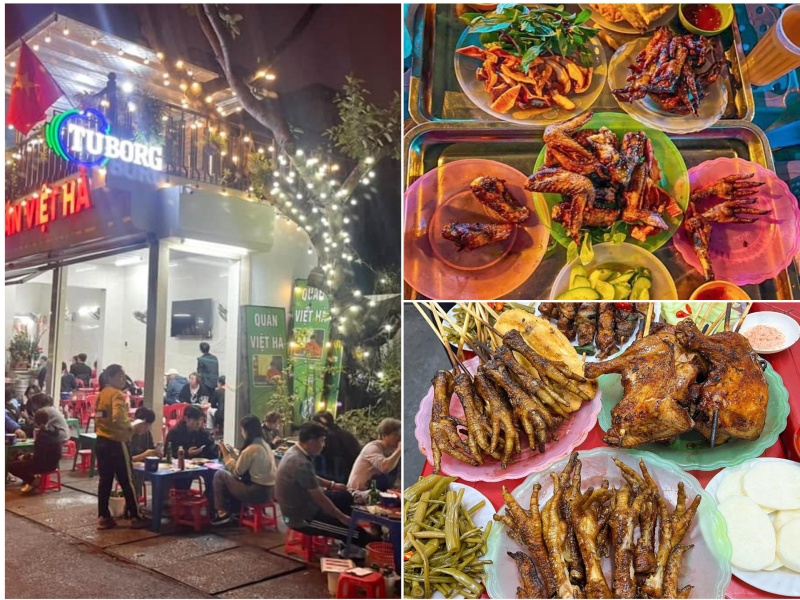
Ly Van Phuc Street – Hanoi’s Grilled Chicken Street
Ly Van Phuc Street in Dong Da is often associated with grilled chicken feet and other grilled chicken snacks.
The smell of food cooking over the grill is especially noticeable in the evening. Chicken feet are usually marinated with spices before grilling, while chicken wings and honey-grilled bread are also common choices.
The street has a casual atmosphere and is particularly suitable for an evening snack with friends.
Local Food Markets in Hanoi
Traditional markets are another way to discover Hanoi’s everyday food culture. Alongside fresh produce and household goods, some markets have small food stalls and informal places to eat.
These markets are generally more local in character than tourist-oriented food streets. The food selection and individual stall schedules can change, so it is worth exploring with an open mind.
Hom Market – A Traditional Market with Local Food Stalls
Hom Market, on Hue Street in Hai Ba Trung, is a traditional market known for its range of everyday goods, including textiles, clothing, and household items.
Visitors can also find food stalls and small places serving local dishes and snacks. It is a useful stop if you want to see a working neighborhood market rather than visit a food destination designed specifically for tourists.
Take time to walk around and observe the different stalls. The food selection may vary depending on the time of your visit.
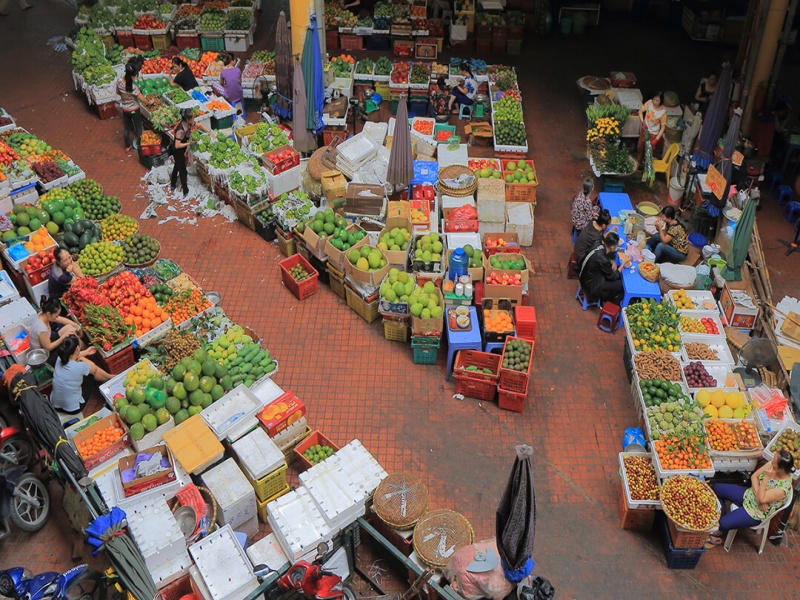
Nguyen Cong Tru Market – A Neighborhood Market with Casual Food
Nguyen Cong Tru Market is an active neighborhood market in Hai Ba Trung, with a local food area serving people who live and work nearby.
You can explore its casual food stalls and everyday market atmosphere. It is a more ordinary, residential food experience than the busy tourist streets in the Old Quarter.
If you enjoy discovering how locals shop and eat, this market is worth considering as part of a wider visit to the surrounding neighborhood.
Nghia Tan Market – A Popular Local Snack Area
Nghia Tan Market in Cau Giay is known as a local food and snack area, particularly popular with students and residents.
The surrounding stalls offer a range of inexpensive Vietnamese snacks and casual dishes. Depending on the vendors operating when you visit, you may find tofu pudding, grilled skewers, fried cakes, snail dishes, and other familiar street foods.
The area is especially lively around the evening, making it a good place to explore if you want to experience a more everyday side of Hanoi’s food culture.

FAQs
- What are the best food streets to explore in Hanoi?
Some popular food streets include Ta Hien and Tong Duy Tan in the Old Quarter, Ngu Xa for pho cuon, Hoe Nhai for Vietnamese-style steak, and Ly Van Phuc for grilled chicken snacks. Each area offers a different local food experience.
- Where can I find street food in Hanoi Old Quarter?
Hanoi Old Quarter has several streets and areas worth exploring, including Hang Buom, Ta Hien, Ho Hoan Kiem, Tong Duy Tan, and the food alley near Dong Xuan Market. You can find casual eateries, local snacks, and traditional Vietnamese dishes.
- Are Hanoi food streets open during the day or only at night?
It depends on the area. Some streets have eateries serving meals throughout the day, while others become livelier in the evening. Ta Hien is especially popular at night, and many snail restaurants around West Lake open from the afternoon onwards.
- Where can I explore local food outside Hanoi Old Quarter?
You can visit Ngu Xa for pho cuon and pho chien phong, Hoe Nhai for Vietnamese-style steak, Ly Van Phuc for grilled chicken snacks, or the West Lake area for local snail restaurants. To Hieu and Nghia Tan also offer casual neighborhood food options.
- Are local markets in Hanoi worth visiting for food?
Yes. Markets such as Hom Market, Nguyen Cong Tru Market, and Nghia Tan Market offer a glimpse of everyday food culture in Hanoi. You may find casual food stalls and local snacks, although the selection varies by market and time of visit.
Conclusion: Explore Hanoi Through Its Food Streets and Local Markets
For a closer look at the dishes themselves, read our guide to the best Hanoi street foods to try. If you are looking for specific eateries and food spots in the Old Quarter, see our guide to where to eat in Hanoi Old Quarter.
Want to explore beyond the food scene? Our Hanoi Travel Guide covers the city’s main attractions, transport options and practical travel tips. You can also discover more things to do in Hanoi when planning the rest of your trip.
Prefer to explore with a local guide? Discover our Hanoi Street Food Tour and enjoy a guided introduction to the city’s food culture.