Trang An Landscape Complex Overview
Trang An Landscape Complex is one of Vietnam’s most important heritage sites, recognized by UNESCO in 2014 as a Mixed World Cultural and Natural Heritage — a rare designation shared by only a handful of places worldwide.
More than a single attraction, Trang An is a vast cultural landscape shaped over thousands of years, where limestone karst mountains, river valleys, wetlands, caves, temples, and archaeological sites coexist in exceptional harmony.
Located in Ninh Binh Province, around 100 km south of Hanoi, the Trang An Landscape Complex represents the historical, spiritual, and geological heart of the region often referred to as “Ha Long Bay on land.”
This page explains what Trang An Landscape Complex is, why it holds UNESCO World Heritage status, and how its natural and cultural values are preserved today.
 For a broader overview of nearby attractions, see our complete Things to Do in Ninh Binh guide.
Highlights of Trang An Landscape Complex
Scenic Karst Mountains & River Valleys
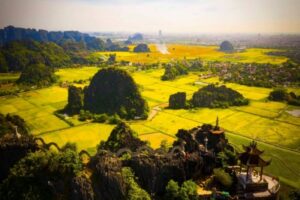
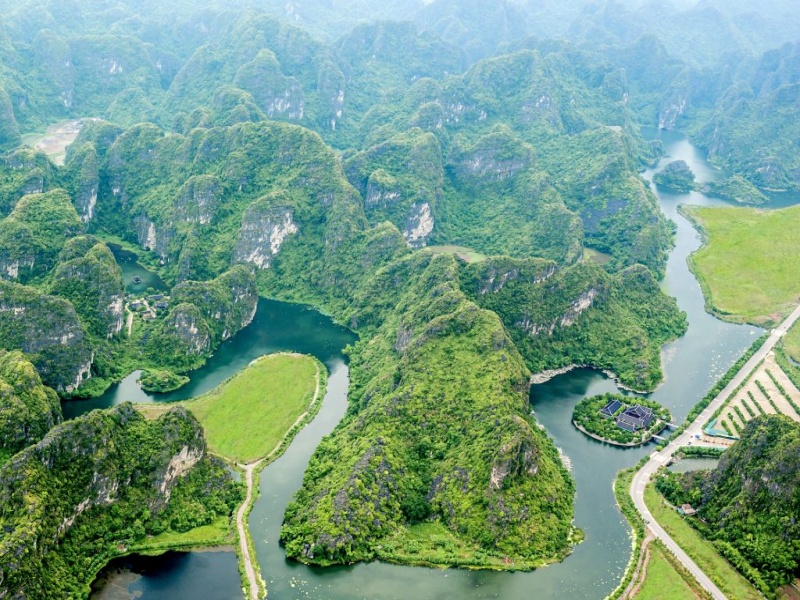
Towering limestone karsts rise dramatically from emerald waterways, creating one of the most iconic natural landscapes in northern Vietnam. These formations were shaped over millions of years and form the visual backbone of Trang An’s UNESCO designation.
Cave & Grotto Systems
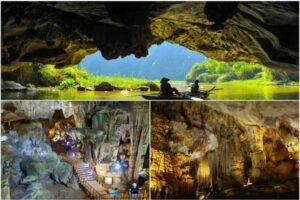
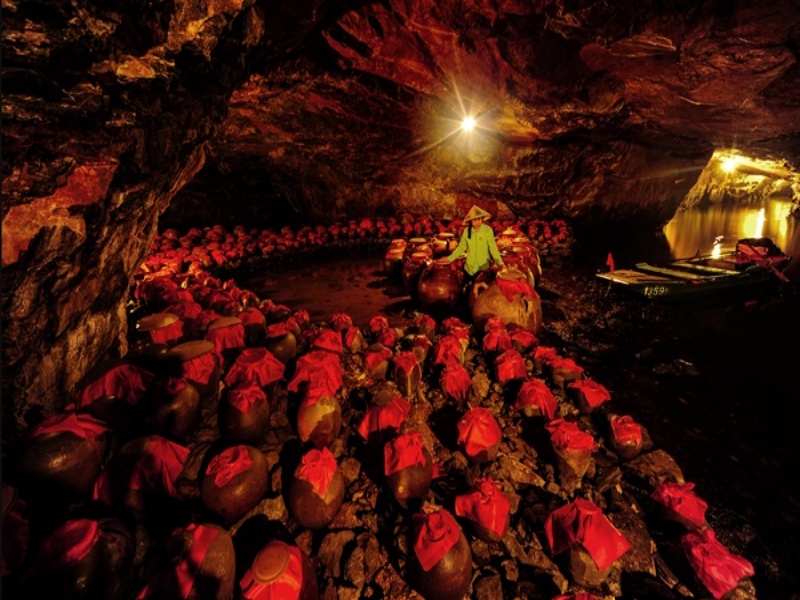
Trang An eco tourism site is home to an extensive network of wet and dry caves carved by underground rivers, including Bright Cave, Dark Cave, Nau Ruou Cave, Ba Giot Cave, and Dia Linh Cave. These grottoes are accessed exclusively by boat and are strictly protected as part of the heritage zone.

Historical & Spiritual Heritage
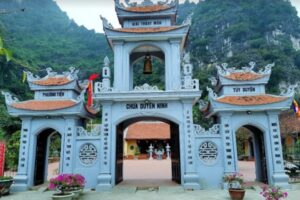
Hidden among the mountains are sacred sites such as Vu Lam Palace, Trinh Temple, Tran Temple, Suoi Tien Temple, and Khong Palace — reflecting Vietnam’s royal, military, and spiritual history from the Dinh, Le, and Tran dynasties.

Living Cultural Landscape
Traditional sampan rowing operated by local communities, temples tucked inside remote valleys, and archaeological remains illustrate a continuous human presence that has coexisted with nature for millennia.
With its rare combination of geology, spirituality, and archaeology, Trang An Landscape Complex offers deep insight into why Ninh Binh is one of Vietnam’s most important heritage regions.
Learn more about its global significance on the official UNESCO World Heritage listing.

Practical Information for Visitors
Access to the core zones of Trang An Landscape Complex is regulated under UNESCO heritage management policies to ensure long-term conservation and sustainability.
Visitors enter the protected landscape through officially managed heritage corridors operated by local communities under strict environmental and cultural guidelines.
Boat capacity, visitor flow, and access routes are standardized to protect sensitive geological formations and historical sites.
Trang An Ninh Binh Ticket Prices
- Adults: 300,000 VND / person
- Children (1m – 1.3m): 150,000 VND
- Children under 1m: Free
- Parking: ~10,000 VND / motorbike

Best Time to Visit Trang An Landscape Complex
Trang An Landscape Complex is open year-round, with each season offering a different atmosphere:
- Spring (Feb–Apr): Festival season with cultural ceremonies and pleasant weather
- Summer (May–Jun): Golden rice fields and blooming lotus flowers
- Autumn (Sep–Oct): Cooler temperatures and clear skies, ideal for photography
- Winter (Nov–Jan): Misty mornings create a mystical, serene landscape
Compare seasonal conditions across the region in our Best Time to Visit Ninh Binh guide.

How to Get to Trang An Eco Tourism Complex from Hanoi
- Limousine Bus: Comfortable, door-to-door service, 1.5–2 hours
- Train: 2–2.5 hours to Ninh Binh Station, then 15 minutes by taxi
- Private Car / Taxi: Most convenient for families and small groups
- Motorbike: ~2.5 hours via National Highway 1A (for experienced riders)
See full transportation details in How to Get from Hanoi to Ninh Binh.

What to do in Trang An Landscape Complex?
Take a boat tour
The landscape of Trang An is explored primarily through controlled heritage corridors that pass through river valleys, caves, and temple zones.
These routes are carefully designed to balance visitor access with conservation, ensuring that Trang An remains a living heritage landscape rather than a mass-tourism site.
For route maps, comparisons, and planning tips, see our detailed Trang An Boat Tour Guide.

Caves & Grottoes of Trang An (Heritage Overview)
The caves of Trang An are a defining geological feature of the heritage complex and a key reason for its UNESCO recognition.
Formed over millions of years, these grottoes also preserve archaeological evidence of prehistoric human activity, highlighting the area’s importance as both a natural and cultural archive.
Historical & Spiritual Sites Within Trang An
Trang An Scenic Landscape Complex preserves important remnants of Vietnam’s dynastic past, including:
- Vu Lam Palace: Strategic base of the Tran kings
- Trinh Temple: Honoring officials of the Dinh dynasty
- Tran Temple: Built under King Tran Thai Tong
- Suoi Tien Temple: Remote riverside shrine
- Khong Palace: Dedicated to loyal mandarins of the Dinh era
These sites transform Trang An from a scenic landscape into a deeply meaningful cultural heritage complex.

Nearby Attractions to Combine with Trang An
Thanks to its central location, Trang An Scenic Landscape Complex is often combined with other key Ninh Binh heritage and natural sites:
- Tam Coc
- Hoa Lu Ancient Capital
- Mua Cave Viewpoint
- Bich Dong Pagoda
- Bai Dinh Pagoda
- Thung Nham Bird Park

Travel Tips & Local Culture
- Start early to experience Trang An in its most peaceful state
- Dress modestly when visiting temples
- Respect heritage regulations and environmental guidelines
- Explore local cuisine such as com chay (crispy rice) and mountain goat meat
Food lovers should check What to Eat in Ninh Binh – Local Specialties Guide.

FAQs About Trang An Landscape Complex
What makes Trang An a UNESCO mixed heritage site?
Trang An Scenic Landscape Complex meets criteria for both natural beauty and cultural significance, combining karst geology with archaeological evidence and spiritual heritage.
Is Trang An or Tam Coc better?
Trang An Landscape Complex emphasizes caves and heritage value, while Tam Coc is known for rice fields. Visiting both offers a complete experience.
Full comparison: Trang An vs Tam Coc – Which Should You Choose?
Can Trang An be visited from Hanoi in one day?
Yes. Trang An eco tourism site is one of the most popular destinations for a day trips from Hanoi.
Conclusion & Travel Planning
Trang An Landscape Complex is not simply a scenic destination, but a living cultural landscape where geology, history, and spirituality have evolved together for millennia.
Its UNESCO recognition reflects global acknowledgment of Trang An’s outstanding natural beauty, archaeological importance, and cultural continuity — making it one of Southeast Asia’s most valuable heritage sites.
Understanding Trang An as a heritage complex provides deeper meaning to every river, cave, and temple within it.
Plan your trip with local experts: